
DERMAL FASCIAL RESTORATION (DFR)
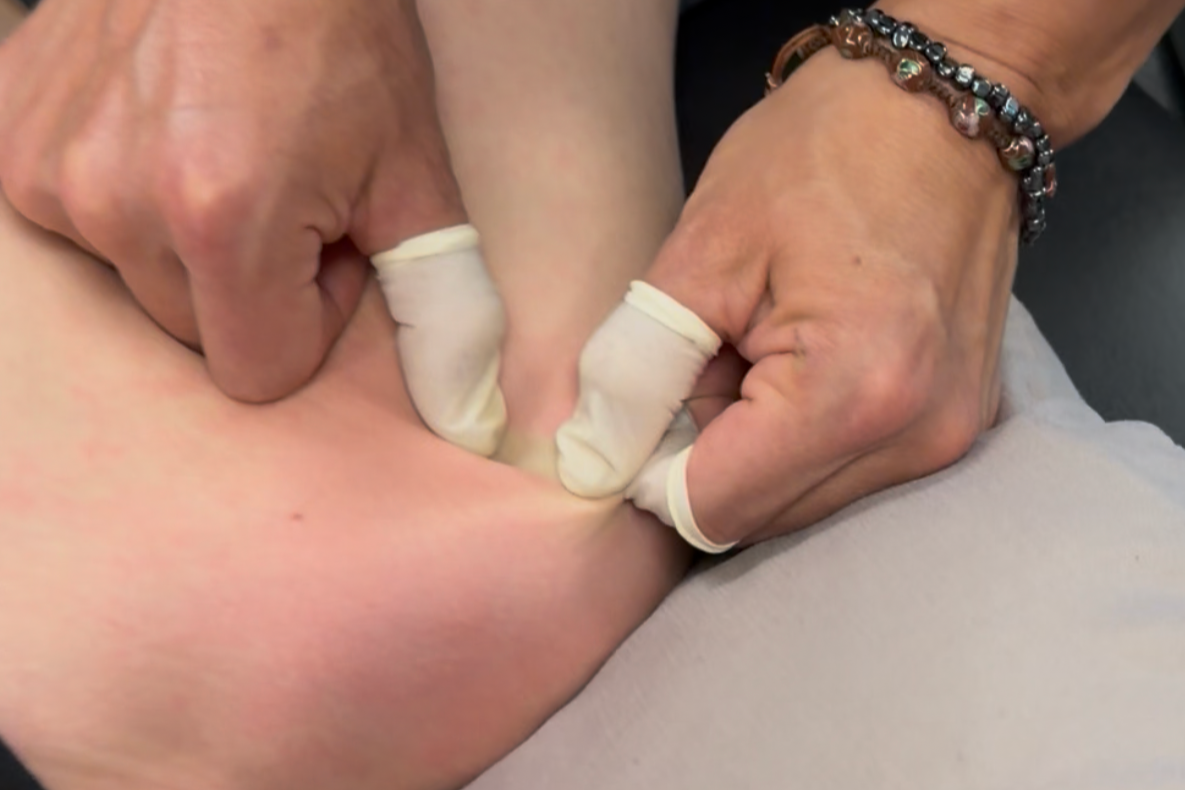
WHAT IS DERMAL FASCIAL RESTORATION (DFR)?
Dermal Fascial Restoration (DFR) is a precise, hands-on technique that works directly with the skin and underlying fascia to release dense, restricted tissue and restore natural movement.
Developed by Dr. Paul Mettler, DFR was created to address areas of scar tissue and long-standing tension that don’t always respond to traditional approaches. By working at the level of the skin and connective tissue, this method helps improve tissue glide, circulation, nerve function, and overall mobility.
DFR is especially helpful for areas where the body feels “stuck,” thickened, or restricted.
WHO IS DFR FOR?
DFR is especially helpful for individuals experiencing:
Chronic pain or tightness (back, neck, hips, shoulders)
Areas that feel “stuck” or restricted
Limited range of motion or mobility
Shoulder restrictions or frozen shoulder
TMJ or jaw tension
Tight hip flexors or ankles
Knee pain or joint discomfort
Digestive-related tension
Old injuries that never seemed to fully heal
Post-surgical scar tightness (C-section, hysterectomy, joint replacement, laparoscopic procedures)
WHAT CAN I EXPECT FROM MY DFR-FOCUSED SESSION?
Consultation
We begin with a focused conversation to understand your history, areas of concern, and goals.
Assessment
Palpation and skin movement assessment help identify areas of dense, restricted, or sensitive tissue.
Treatment
Using precise, targeted techniques, I work directly with the skin and its underlying fascia to free trapped structures like nerves/vessels and restore normal, pain-free movement. The work is focused and intentional, addressing specific areas of dysfunction.
WHAT SHOULD I WEAR FOR MY DFR SESSION?
DFR requires direct skin contact.
Wear clothing that allows easy skin access (shorts, tank tops, or loose layers).
Please avoid lotions, oils, or moisturizers before your session as DFR requires working on clean, dry skin for best results.
WHAT DOES DFR FEEL LIKE?
DFR is a highly targeted technique and feels more intense than Fascia Stretch Therapy, especially in areas of dense restriction or scar tissue.
Sensations may include:
Needle-like sharpness
Dulled sensation/numbness
Burning/tingling
Nerve-y referred pain
Broad pull through tissues
Deep pull down with a root
The intensity reflects the depth and severity of the restriction. While the work can be uncomfortable at times, it is always adjustable to your tolerance, and we work together to keep the experience safe and manageable.
As the tissue quality changes, discomfort decreases and is replaced with a sense of release and improved sensation, movement & bloodflow.
WHAT SHOULD I EXPECT AFTER MY DFR SESSION?
Most people typically experience a temporary flush of redness from increased bloodflow that may resemble a sunburn.
Relief is typically immediate and will settle over the next few days.
Please note:
The treated area may feel similar to a light sunburn for 1–3 days (increased stretch from tissue hydration & waking of dormant nerves)
If you take blood thinners or tend to bruise easily, mild bruising/petechiae (broken capillaries) is possible.
Hydration with electrolytes, rest, and gentle movement are encouraged after your session. Avoid working directly over the area again until everything has completely settled.
WHAT ARE THE BENEFITS OF DFR?
Increased range of motion
Reduction of pain
Decreased tension and stiffness
Improved circulation and tissue health
Restored sensation to previously numb areas
Better muscle activation & stability
HOW I INTEGRATE DFR IN MY SESSIONS
I often combine DFR with Fascia Stretch Therapy and Vibration to support the process.
Vibration helps prepare an area for DFR treatment, while FST helps to relax the nervous system, identify restrictions, & prepare to receive DFR’s less comfortable sensations.
FST & DFR complement each other perfectly to create a more effective and balanced experience.
ABOUT THE FOUNDER
Dermal Fascial Restoration (DFR) was developed by Dr. Paul Mettler, a Doctor of Physical Therapy with over 40 years of clinical experience. Early in his career, he became frustrated by the limited long-term results many patients experienced with traditional physical therapy and myofascial techniques.
In 1991, he began developing a more precise approach to identify and restore damaged or densified soft tissue—particularly scar tissue and areas that restrict normal movement. This work was originally known as the Mettler Release Technique (MRT) and focuses on improving the quality and mobility of the skin and fascia.
As technology advanced, his method evolved into what is now called Dermal Fascial Restoration (DFR). With the support of imaging tools that can measure tissue density, DFR has been shown to reduce tissue stiffness and support more efficient, pain-free movement.
Today, it is used as a non-invasive, drug-free approach to help address chronic pain, scar tissue, and long-standing movement restrictions.